
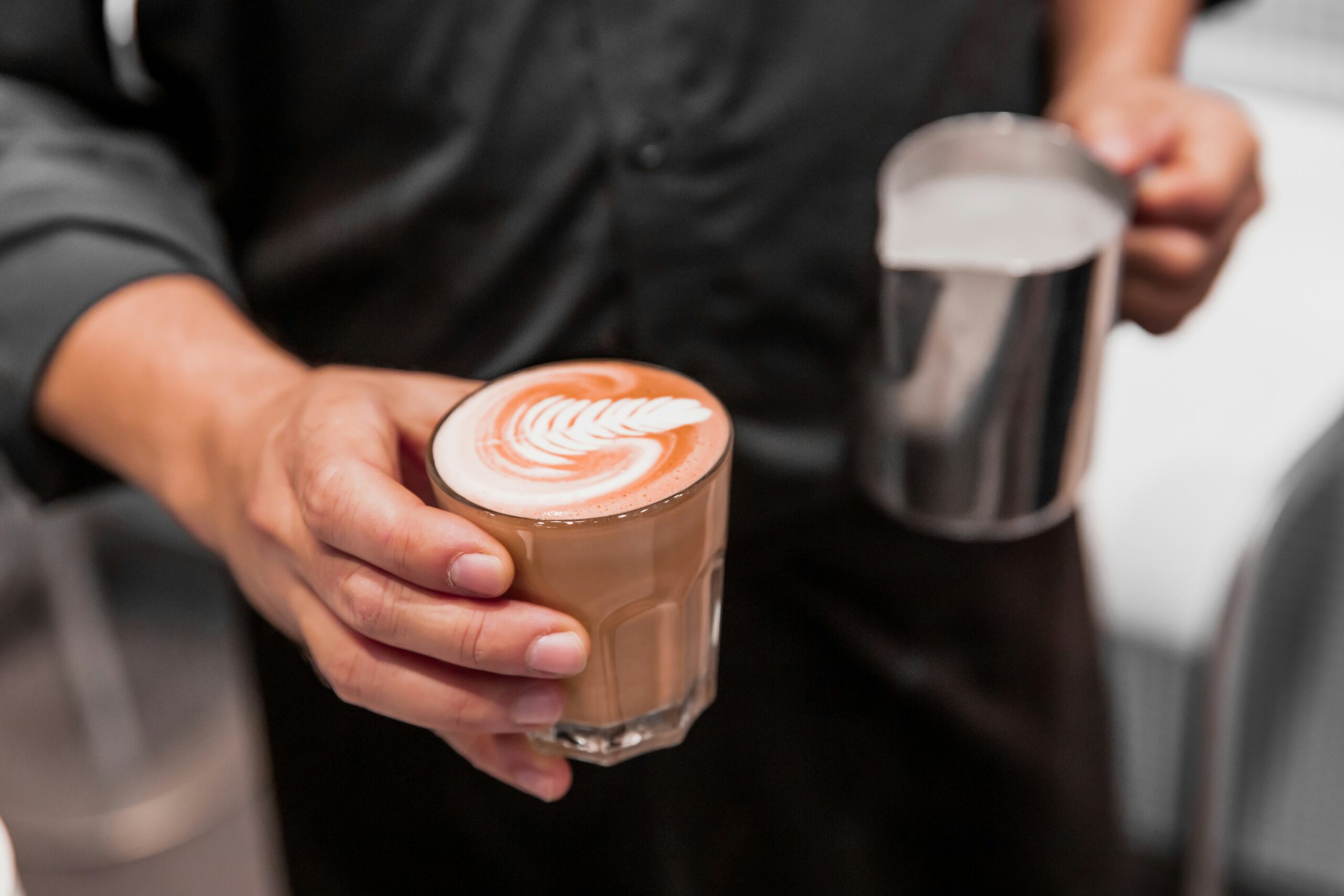
Note: Specialty coffee shops vary enormously. Menus, cup sizes, roast styles and service formats are not standardised, so use this guide to choose a direction rather than expecting every café to make each drink the same way.
The easiest specialty-coffee order is usually the drink you already know you like. You do not need to switch from a latte to a flat white, order a single-origin espresso or pretend to enjoy an unusually fruity filter coffee. Tell the barista what you normally drink and, if you want to try something different, ask them to point you towards the closest match.
New to specialty coffee? Start here
Like milky coffee? Order a latte or flat white. Like black coffee? Try an Americano or the house filter. Want to taste the espresso by itself? Order an espresso. You can explore the more unusual menu options once you know what direction you enjoy.
A latte is a straightforward starting point when you want plenty of steamed milk around the espresso.
A flat white is usually smaller and less milk-heavy, so the espresso remains more prominent.
Try the batch brew or filter if available, or an Americano if you prefer espresso diluted with hot water.
Espresso gives you the clearest taste of the café’s espresso recipe without added milk or water.
What makes a specialty coffee shop different?
“Specialty coffee” does not simply mean expensive coffee, light-roasted espresso or a café with complicated origin information. The Specialty Coffee Association currently defines specialty coffee much more broadly: coffee or a coffee experience can be considered specialty when distinctive attributes give it significant extra value.
Those attributes can be intrinsic—such as flavour, aroma and mouthfeel—or extrinsic, including origin, producer information, processing, certifications and sourcing. Different cafés and customers can value different things, which is why one specialty shop may focus heavily on unusual single-origin filter coffee while another builds its reputation around blends, espresso or carefully prepared milk drinks.
Do not assume “specialty” means very light roast
You may encounter lighter and more origin-led coffees than at a typical chain, but roast preferences vary between roasters. Darker and more traditional flavour profiles can still be deliberately sourced, roasted and served within specialty coffee.
Choose your drink in three questions
Easy first orders
Order a latte
You do not need to “upgrade” to another drink. A latte is espresso with a generous amount of steamed milk and is a perfectly sensible way to taste a café’s coffee.
Try next: a flat white when you want less milk and more espresso flavour.
Order a flat white
Usually smaller and less milk-heavy than a latte, with finely textured steamed milk. Exact sizes and shot counts vary by café.
Try next: a cortado when you want an even smaller, more coffee-forward milk drink.
Order filter or an Americano
Filter coffee is brewed differently from espresso and can be a useful way to explore a café’s beans. An Americano starts with espresso and adds hot water.
Ask: “What’s the filter like today?” when both options sound good.
Order an espresso
A short, concentrated drink that lets you taste the café’s espresso without dilution from milk or added water.
Ask: whether there is a house and guest espresso if the menu lists more than one coffee.
Order your normal drink
If you usually drink a latte, order a latte. If you normally drink black coffee, choose a longer black drink. The most useful comparison is often tasting a familiar drink made with a different coffee rather than changing everything at once.
What about filter, batch brew and guest coffees?
Specialty cafés often put more information on the menu than you may be used to: producer or farm names, processing methods, varieties, tasting notes and sometimes several coffees prepared in different ways. You do not need to decode all of it before ordering.
Filter coffee ready to serve
Usually brewed in a larger batch using a commercial drip brewer. It can be an excellent and quick way to try a café’s filter offering.
Filter made to order
Prepared manually, often using a brewer such as a V60 or Kalita. It normally takes longer and may cost more because it is made individually.
An alternative to the house coffee
Often a rotating coffee with a different origin, process or flavour profile. Ask what changes rather than assuming the guest option is automatically “better”.
Country and processing method can provide useful context, but neither guarantees a particular flavour or quality level. Coffees from the same origin can taste very different, and the same processing method can produce a wide range of results. For a first choice, the roaster’s tasting notes are usually a more useful guide to whether the coffee is likely to suit you.
What should you ask the barista?
You do not need a technical question. Give them information they can actually use.
“I normally drink a latte. What would you recommend here?”
Probably the most useful first question because it starts from a preference you already understand.
“What’s the filter like today?”
Invites a simple flavour description without requiring you to understand the origin or processing information first.
“Which one is more chocolatey and which is fruitier?”
A broad comparison is usually more actionable than asking which coffee is objectively best.
“What are you enjoying at the moment?”
A friendly open question when you genuinely want the person serving you to steer the choice.
You do not have to order what the barista likes
A recommendation is useful context, not a test. If they love bright, floral filter coffee and you prefer chocolate-led espresso with milk, saying so helps them make a better recommendation.
Can you order decaf, syrup or extra shots?
Yes. Order the drink you actually want. Availability varies, particularly in smaller cafés, but none of these requests makes you an inappropriate customer.
Order it normally
Specialty decaf can be carefully sourced and roasted just like caffeinated coffee. Ask what decaf option is available and how the café recommends serving it.
Ask what is available
Oat, soy, almond and other options change flavour and texture, but they are ordinary café choices where stocked.
Useful when you want more espresso
An extra shot changes the coffee-to-milk or coffee-to-water ratio as well as caffeine. That may be exactly what you want in a larger drink.
Availability is the only question
Some specialty cafés do not stock flavoured syrups because of the menu they choose to run; others do. Asking is not a statement about your coffee knowledge.
What if the coffee tastes unusual?
Specialty coffee can expose you to flavour profiles you have not encountered before, but an unfamiliar taste is not automatically something you are expected to enjoy. A brighter roast, a fruit-led process or a different espresso recipe may taste noticeably different from your usual coffee.
Take another sip once the drink has cooled slightly and decide whether the flavour is simply unfamiliar or genuinely unpleasant to you. If something seems wrong—perhaps the drink is intensely sour, harsh, unexpectedly cold or otherwise not what was described—it is reasonable to ask.
A simple way to raise it
“This tastes much sharper than I expected—is that how this coffee is meant to taste?” That gives the barista room to explain the coffee, taste the espresso themselves or remake the drink if something went wrong, without either side having to pretend there is one objectively correct palate.
Useful phrases when you are not sure
“I want something milky but still coffee-forward.”
Useful when you do not know whether the café’s flat white, cortado or smaller latte is the best match.
“I want a longer black coffee—what would you choose?”
Lets the café steer you towards Americano, batch brew or another filter option.
“I prefer chocolatey to really fruity coffee.”
A simple flavour preference often tells the barista more than knowing a list of origins.
“I’m happy to try something new—what would you suggest?”
Gives the person serving you permission to move further away from your usual order.
The key takeaway
The best first specialty-coffee order is the one that starts from what you already enjoy. You do not need to prove anything by ordering filter instead of latte, single origin instead of a blend, or espresso instead of decaf.
Use the menu for clues, tell the barista what you like and ask questions when you want help. Specialty coffee is ultimately about coffees and coffee experiences with attributes that people value—not about passing an entrance exam before you are allowed to order.
Frequently asked questions
What should a beginner order at a specialty coffee shop?
Start with the drink you already enjoy. A latte is a good choice if you like plenty of milk, a flat white if you want the espresso to be more prominent, an Americano or filter coffee if you drink black coffee, and an espresso if you want a short concentrated drink.
What is specialty coffee?
The Specialty Coffee Association defines specialty coffee as coffee or a coffee experience recognised for distinctive attributes that give it significant extra value. Those attributes can include flavour and aroma as well as origin, producer information, processing, sourcing or other characteristics.
Is it okay to order a latte at a specialty coffee shop?
Yes. A latte is a normal espresso-and-milk drink and can be an excellent way to experience a café’s espresso if that is the style you enjoy. You do not need to order a smaller milk drink to demonstrate coffee knowledge.
Should I order filter coffee at a specialty café?
Try it if you enjoy black coffee or want to explore a coffee prepared without espresso. Batch brew is often quick and convenient; pour over is commonly made to order. Ask what the filter tastes like if you are unsure whether its flavour profile suits you.
Is single-origin coffee better than a blend?
No. A single-origin coffee highlights one defined source, while a blend combines coffees to achieve a particular flavour or performance. Either can be excellent, and many cafés deliberately use blends for consistent espresso.
Is specialty coffee always light roasted?
No. Specialty cafés often showcase lighter and more origin-led roast styles, but specialty coffee is not defined by roast colour. Roasters can choose a wide range of roast profiles depending on the coffee and the experience they want to create.
Can I order decaf at a specialty coffee shop?
Yes. Many specialty cafés serve decaf that has been selected and roasted with the same attention applied to caffeinated coffee. Availability varies, so simply ask what decaf option the café has.
What should I do if my coffee tastes sour?
First decide whether the flavour is simply brighter or more acidic than you are used to. If it seems intensely or unpleasantly sour, ask whether that is the intended profile. The barista can explain the coffee and check the preparation if necessary.
Coffee Cheat Sheets
This guide uses the Specialty Coffee Association’s current definition of specialty coffee and Coffee Value Assessment framework as reference points. Drink recipes, roast styles, menus and service practices vary between cafés, so the individual shop’s menu and staff remain the best guide to what is actually being served.