
Disclosure: Home Barista Guide uses affiliate links. If you buy through one of our links, we may earn a small commission at no extra cost to you. This does not affect our guidance.
An espresso macchiato is an espresso marked with a small amount of milk or milk foam. It remains a short, coffee-led drink rather than a miniature latte. The name can also refer to a latte macchiato or a sweet caramel macchiato, so specifying the version you want avoids confusion.
Espresso with a small mark of warm milk, textured milk or foam.
Usually served in an espresso cup and only slightly larger than the espresso itself.
Strongly coffee-forward, with a little sweetness, softness and texture from the milk.
Ask for an espresso macchiato when you want the short traditional-style drink.
What is a macchiato?
In its short espresso form, a macchiato is an espresso with only enough milk to mark or soften it. The milk may be a small spoonful of foam, a dash of warm textured milk or a combination of the two. There is no universal millilitre quantity.
The exact espresso can also vary. Some cafés serve a single; others use a double as their standard recipe. The useful definition is therefore based on the small milk addition rather than a fixed shot count or final volume.
What does “macchiato” mean?
The name comes from the Italian verb macchiare, meaning to mark or stain. In coffee language, a small amount of milk marks the espresso; in a latte macchiato, the order is reversed and coffee marks the milk.
Two names built from the same idea
Caffè macchiato is coffee marked with milk. Latte macchiato is milk marked with coffee. The order of the words describes which ingredient remains dominant.
Espresso macchiato versus latte macchiato
Espresso macchiato
A short espresso drink with a small addition of warm milk or foam.
- Espresso remains the main ingredient
- Served in an espresso cup or small demitasse
- Only a little milk enters the drink
- Strong coffee flavour with slight softness
- May use a single or double espresso
Latte macchiato
A much larger, milk-led drink in which espresso is added to steamed or foamed milk.
- Milk remains the main ingredient
- Commonly served in a tall glass
- Espresso is poured into or through the milk
- Can show distinct milk, coffee and foam layers
- Milder and substantially larger
How to order a macchiato clearly
The word alone can describe several different drinks. Café conventions also vary, so a small amount of clarification is more reliable than assuming every menu uses the term in the same way.
Ask for an espresso macchiato
This signals that you want espresso with only a small amount of milk or foam.
Ask for a latte macchiato
This signals milk first, with espresso added afterwards and often a layered appearance.
Use the full menu name
A caramel or iced caramel macchiato is a different, sweetened drink rather than an espresso with a milk mark.
A practical café question
When the menu is unclear, ask whether the macchiato is the short espresso version or a larger milk drink. That one question resolves most of the ambiguity.
A practical espresso-macchiato starting recipe
Use the single or double dose intended for the basket and café style.
A conventional single or compact double makes a practical starting point.
Begin with a teaspoon or small spoonful, then adjust without hiding the espresso.
Use a demitasse that keeps the drink compact and preserves its character.
The milk quantity is deliberately a range. Some macchiatos are marked with foam alone, while others receive a small pour of textured milk. The final drink should still be clearly dominated by espresso.
How to make an espresso macchiato at home
Preheat a small cup
A demitasse or espresso cup helps retain heat without inviting a large milk addition.
A much larger cup can encourage over-pouring.Brew a measured espresso
Use the dose appropriate to the basket and a repeatable beverage output. Dial in the espresso before using milk to compensate.
See the espresso guide for the full method.Texture enough milk to steam reliably
Domestic steam wands often need more milk in the jug than the drink itself uses. Introduce air according to the finish you prefer.
The jug quantity is not the recipe quantity.Mark the espresso
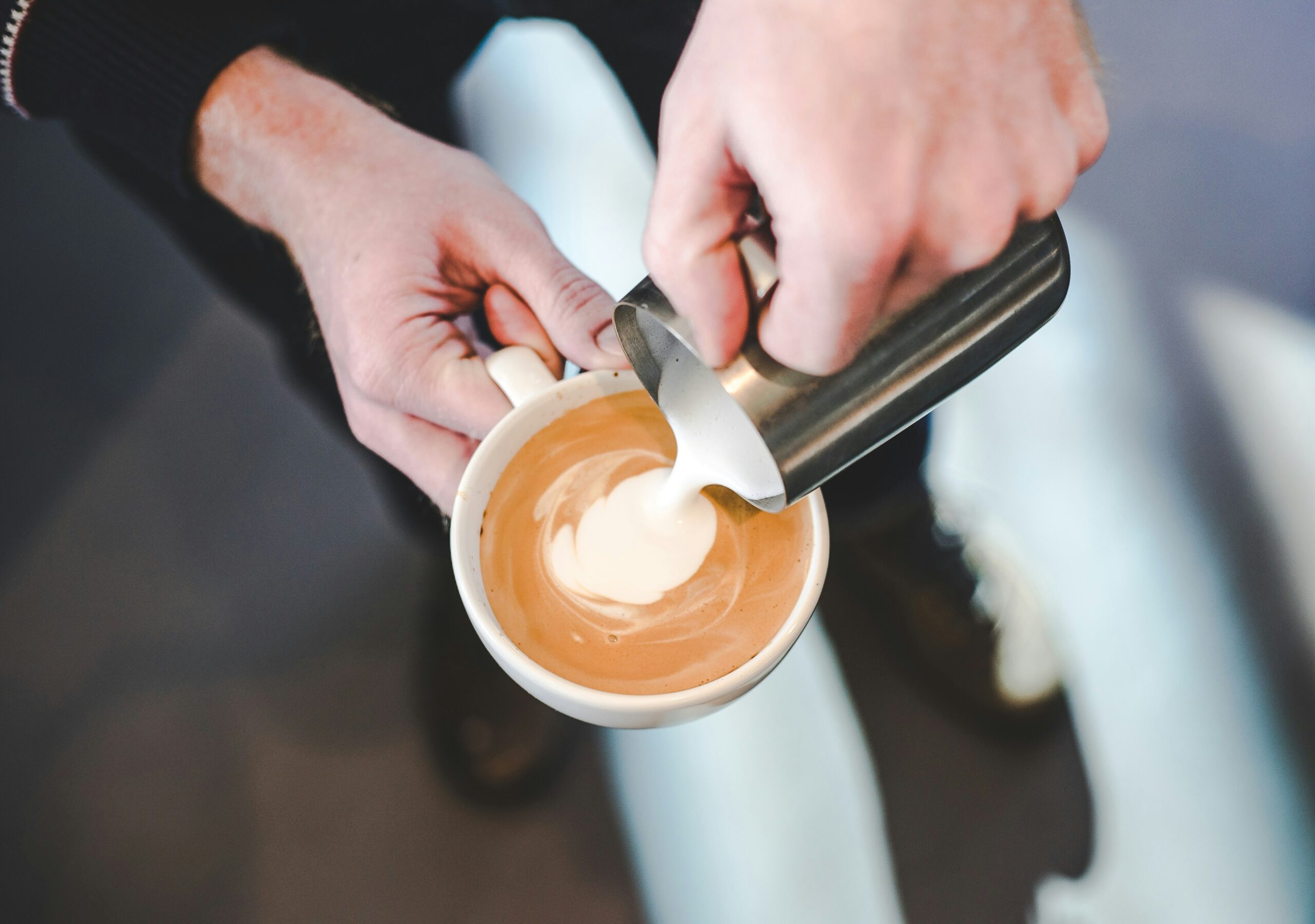
Add one small spoonful of foam, a dash of warm milk or a little of both to the centre of the espresso.
Stop while the drink still tastes principally like espresso.Should a macchiato use milk or foam?
Either can be appropriate. Café practice includes foam-only macchiatos, a small splash of steamed milk and versions that combine fluid milk with fine microfoam. The term describes the small mark on the espresso more reliably than one mandatory texture.
Spoon a small dollop on top
This creates a visible white mark and adds texture with very little dilution.
Pour a small dash
This softens the coffee more evenly and can make the drink feel slightly rounder.
Add fluid microfoam
A small quantity of glossy textured milk can integrate with the espresso and support simple pouring.
Dairy and plant-based milk can both be used. Because the quantity is small, choose a milk that complements the espresso and can be textured reliably rather than assuming one type is compulsory.
What is a caramel macchiato?
A caramel macchiato is a sweet, milk-led coffee built differently from an espresso macchiato. A typical version combines vanilla-flavoured syrup, warm or cold milk, espresso poured into the milk and caramel sauce or drizzle.
The name makes more sense when viewed as a flavoured latte-macchiato-style drink: the milk forms the main body and the espresso marks it from above. It should not be used as a size or flavour reference for a traditional espresso macchiato.
Espresso macchiato
- Small and espresso-led
- Only a little milk or foam
- Usually unsweetened unless requested
- Served in an espresso cup
Caramel macchiato
- Large and milk-led
- Includes substantially more milk
- Usually contains syrup and caramel topping
- May be served hot or iced
Macchiato versus similar coffee drinks
Macchiato versus cortado
A cortado uses enough warm milk to create a balanced espresso-and-milk drink. A macchiato uses only a small mark and remains much closer to straight espresso.
Macchiato versus cappuccino
A cappuccino contains a substantial quantity of textured milk and foam. The macchiato is far smaller and more concentrated.
Macchiato versus flat white
A flat white combines espresso with enough silky milk to fill a modest cup. A macchiato adds only enough to soften or mark the espresso.
Macchiato versus latte
A latte is extended with a large quantity of textured milk and tastes much milder, even when both drinks use the same coffee dose.
Is a macchiato strong?
Yes, it is normally intense
The small milk addition leaves the espresso concentrated, so the coffee remains much more noticeable than in a cortado, flat white or latte.
It depends on the espresso dose
A macchiato made from one espresso has roughly the caffeine of that espresso. Milk quantity and foam do not materially add caffeine.
A double macchiato can contain more caffeine than a single latte, while a single macchiato can contain less than a double flat white. Drink size is therefore not a reliable caffeine guide.
Making a macchiato with different equipment
Most control over the mark
Brew the espresso, texture enough milk for the wand to work and spoon or pour only a small quantity into the cup.
Use a short custom milk quantity
Choose espresso first, then add the smallest practical milk portion. A preset labelled macchiato may produce a larger drink, so check its recipe.
Make a macchiato-style drink
Brew a concentrated espresso capsule and add a teaspoon or spoonful of warmed or foamed milk rather than running a full milk programme.
Common macchiato mistakes
Adding enough milk to fill the cup
An espresso macchiato uses only a small mark. A larger milk quantity turns it into a different style of drink.
Assuming every café serves a single
Some cafés use a double espresso as standard. Ask about the shot count when caffeine or intensity matters.
Expecting a caramel drink from the word alone
A traditional espresso macchiato is normally unsweetened. Use the full flavoured menu name when that is what you want.
Using dry foam as the only valid style
Foam is common, but a dash of warm milk or fluid microfoam also fits the idea of marking the espresso.
Calling every small milk drink a macchiato
Cortados and piccolos contain substantially more integrated milk and create a different balance.
Using milk to hide a poor espresso
The quantity is too small to disguise major extraction problems. Dial in the espresso first, then add the mark.
Related guides
The key takeaway
An espresso macchiato is espresso marked with a small amount of milk or foam. It remains a short, concentrated coffee drink rather than a small latte.
Because the name also appears on large milk-led and flavoured drinks, ask for an espresso macchiato when you want the traditional-style version.
Frequently asked questions
What does macchiato mean?
It means marked or stained in Italian. In an espresso macchiato, milk marks the coffee; in a latte macchiato, coffee marks the milk.
Is a macchiato just espresso with foam?
That is one common preparation, but not the only one. A small dash of warm milk or fluid microfoam can also be used.
Is a macchiato stronger than a latte?
It normally tastes much stronger because it contains far less milk. Caffeine depends on the number of espresso shots and the coffee dose.
Does a macchiato have more caffeine than espresso?
Not when both use the same espresso recipe. The small milk addition does not increase the caffeine meaningfully.
What is the difference between a macchiato and a cortado?
A macchiato uses only a small mark of milk or foam. A cortado contains enough warm milk to create a more balanced espresso-and-milk drink.
What is the difference between an espresso macchiato and latte macchiato?
An espresso macchiato is coffee marked with milk and remains small. A latte macchiato is milk marked with coffee and is much larger and milkier.
Is a caramel macchiato a traditional macchiato?
No. It is a sweet, milk-led drink commonly made with flavoured syrup, milk, espresso and caramel topping. Its structure is closer to a flavoured latte macchiato.
How much milk should I add?
Begin with about one teaspoon or a small spoonful of foam, then adjust. Stop before the milk becomes a substantial part of the drink.
Can I use plant-based milk?
Yes. Use a product that textures reliably and complements the espresso. Only a small amount enters the drink.
Can a macchiato use a double espresso?
Yes. Many cafés use a double as their standard espresso recipe. The milk addition should still remain small relative to the coffee.
How do you pronounce macchiato?
In Italian it is approximately pronounced “mah-kee-AH-toh”, with the emphasis on the third syllable.
What should I order if I want the small version?
Ask for an espresso macchiato and, where useful, confirm whether the café serves it with a single or double shot.
This guide reflects established Italian terminology and current café practice as of August 2026. Macchiato recipes vary between cafés, so the quantities shown are practical starting points rather than mandatory standards.