
Disclosure: Home Barista Guide uses affiliate links. If you buy through one of our links, we may earn a small commission at no extra cost to you. This does not affect how products are assessed.
De’Longhi and Sage overlap most clearly in compact manual machines and espresso makers with integrated grinders, but their ranges take different routes once convenience becomes the priority. De’Longhi offers everything from low-cost manual machines to guided portafilter models and fully automatic bean-to-cup systems. Sage concentrates more heavily on portafilter espresso, adding faster heating, assisted dosing, automatic milk and touchscreen guidance as you move up the range.
The model comparisons used here are current UK pairings: Dedica Duo EC890.M vs Bambino SES450BSS4GUK1; La Specialista Arte Evo EC9255.M EX:2 vs Barista Express BES875UK; La Specialista Touch EC9455.M EX:2 vs Barista Express Impress SES876BSS4GUK1. The fully automatic section uses the Magnifica Evo ECAM290.83.TB EX:1. Colour suffixes and promotional bundles can vary.
One-touch bean-to-cup coffee, more lower-priced manual options and cold-drink features across a wider part of the range.
A portafilter-based route, 54mm accessories on Bambino and Barista machines, and more emphasis on manual espresso preparation.
Dedica Duo versus Bambino: both need a separate grinder, but they differ in baskets, cold drinks and the upgrade path.
La Specialista Touch versus Barista Express Impress: similar list prices, but very different levels of guidance and milk automation.
How De’Longhi and Sage differ
The main difference is not simply quality or brand prestige. It is how each range expects you to make coffee. De’Longhi lets you choose between a traditional portafilter, an integrated-grinder manual machine and a fully automatic system that completes the drink with very little intervention.
Sage’s current UK range is built more heavily around portafilter machines. The Bambino models leave grinding to a separate grinder, the Barista range brings the grinder into the machine, and the more expensive Touch and Oracle models automate parts of dosing, tamping and milk preparation. Even the highly automated Sage machines retain the portafilter workflow rather than operating like a Magnifica-style fully automatic.
In simple terms: De’Longhi gives you more ways to reduce the work involved, while Sage gives you more ways to stay involved without doing every step unaided.
The current ranges at a glance
| Buying route | De’Longhi | Sage | What separates them |
|---|---|---|---|
| Compact manual | Dedica Duo, around £280 | Bambino, around £330 | De’Longhi adds quick cold extraction and ESE pod flexibility; Sage includes 54mm single- and dual-wall baskets. |
| Manual with grinder | La Specialista Arte Evo, list price around £550 | Barista Express, list price around £630 | De’Longhi adds cold extraction and a smaller body; Sage provides a 54mm portafilter, 16 grinder settings and PID-controlled brewing. |
| Guided and assisted | La Specialista Touch, list price around £700 | Barista Express Impress, list price around £730 | De’Longhi uses a touchscreen, guided recipes and automatic milk; Sage uses intelligent dosing, assisted tamping and manual milk steaming. |
| Fully automatic | Magnifica, Rivelia, Dinamica and Eletta families | No direct equivalent in the same workflow | De’Longhi can grind, brew and prepare milk drinks without handling a portafilter. |
| Premium automation | La Specialista Maestro and higher automatic ranges | Touch and Oracle families | Both add guidance and automation, but Sage continues to centre the process around a portafilter. |
Prices above are useful for positioning rather than as fixed buying prices. Both brands run promotions, and the gap between two competing machines can change substantially.
Compact manual machines: Dedica Duo vs Bambino
This is the most logical entry-level comparison. Both machines are compact, use a portafilter, require a separate grinder for fresh beans and give you manual control over milk steaming. The difference is where each one makes the learning curve easier.
Dedica Duo
A very narrow manual machine with hot espresso, quick cold extraction and ESE pod compatibility.
- Lowest machine priceIt normally sits below the Bambino before the cost of a grinder is added.
- Cold-drink optionThe dedicated cold-extraction programme prepares a cooler coffee in under five minutes.
- More forgiving basketsThe supplied pressurised baskets work more readily with pre-ground coffee and less precise grinding.
- Very narrow bodyIts 15cm width is particularly useful on a crowded counter.
Bambino
A compact 54mm espresso machine aimed at buyers who want a more traditional route to dialling in fresh coffee.
- Single- and dual-wall basketsYou can begin with the forgiving baskets and move to single-wall baskets as your grinder and technique improve.
- Fast startThe ThermoJet system is ready in around three seconds.
- 54mm accessory routeThe portafilter size is shared across much of Sage’s Bambino and Barista range.
- Manual milk controlThe steam wand suits buyers who want to learn how to texture milk themselves.
Decision: choose the Dedica Duo for the narrower body, lower initial spend and cold-coffee option. Choose the Bambino if the included single-wall baskets and 54mm upgrade path matter more.
Remember the grinder
Neither machine includes one. A suitable espresso grinder can add more to the total setup cost than the price difference between the machines. Pre-ground coffee is easier with the Dedica’s pressurised baskets, but freshly ground beans give both machines more room to improve.
Integrated-grinder espresso machines
De’Longhi’s La Specialista range and Sage’s Barista range are the closest direct competitors. Both grind into a portafilter and keep the user involved in brewing, but the amount of guidance and automation varies substantially by model.
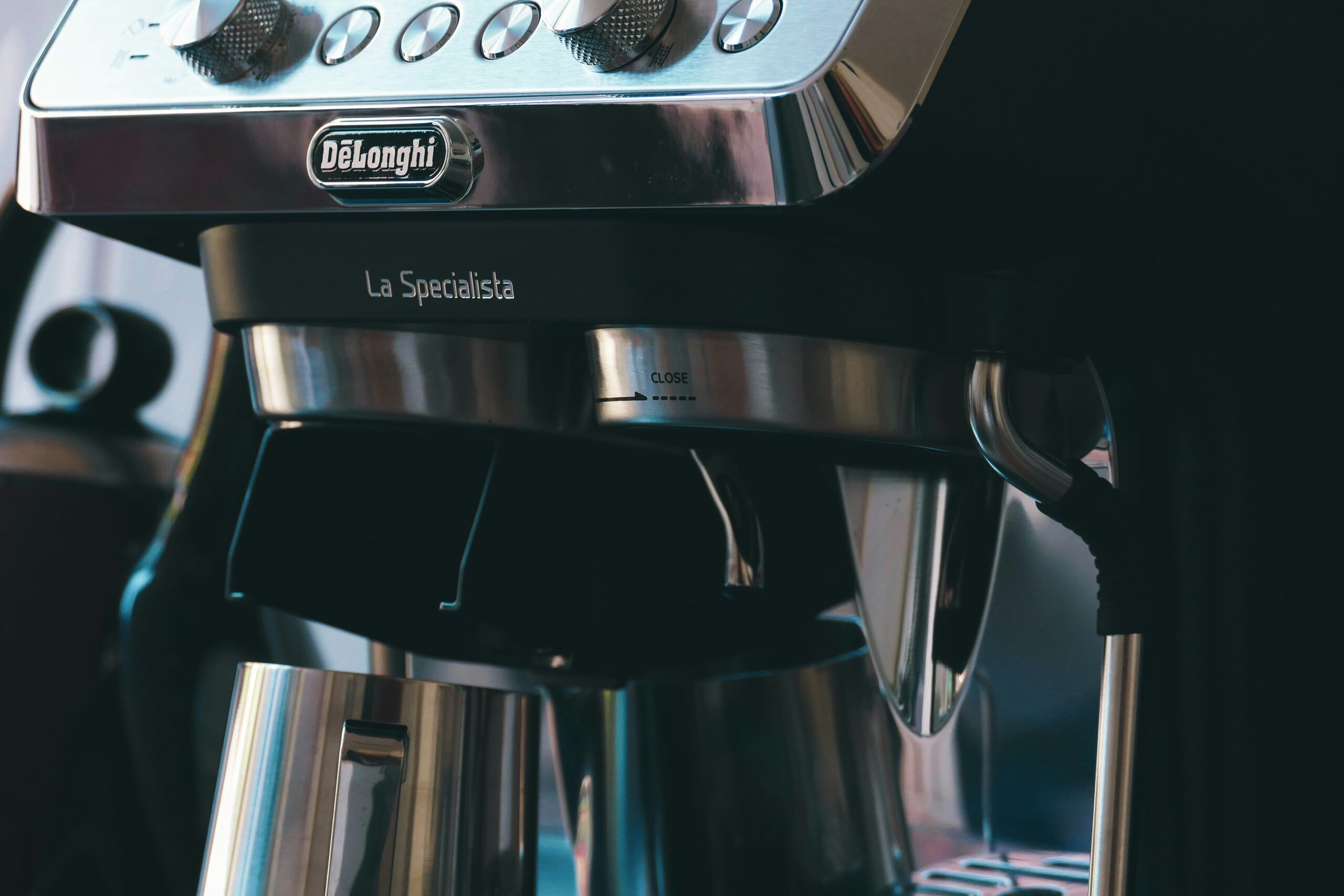
La Specialista Arte Evo vs Barista Express
A like-for-like comparison for buyers who want an integrated grinder but still prefer a hands-on espresso routine. Both machines grind into a portafilter and leave you in control of preparing the coffee puck and texturing the milk.
La Specialista Arte Evo
A compact all-in-one manual setup with three temperature profiles and a quick cold-extraction mode.
- Cold extraction includedIt can prepare espresso, long black and a quick cold-brew-style drink.
- Compact for an all-in-oneThe body is smaller than many grinder-equipped espresso machines.
- Fifteen grinder settingsThe adjustment range gives you room to fine-tune the flow as you change beans.
- Manual My LatteArt wandYou retain direct control over milk texture.
Barista Express
A well-established 54mm manual setup with more grinder positions and a broader supplied basket selection.
- Sixteen grinder settingsIt gives you more steps for adjusting flow as beans change.
- Single- and dual-wall basketsThe included set supports both an easier starting point and a more traditional dial-in process.
- PID-controlled ThermocoilThe machine controls brewing temperature and uses low-pressure pre-infusion before 9-bar extraction.
- Large accessory ecosystemSage sells a wide range of compatible 54mm tools and replacement parts.
The Arte Evo is the more distinctive option if cold coffee and a smaller footprint are genuinely useful. The Barista Express offers the more established 54mm route and more adjustment within a conventional hot-espresso workflow.
La Specialista Touch vs Barista Express Impress
This comparison is really about how much help you want from the machine. The La Specialista Touch guides you through the full drink and can texture the milk automatically, while the Barista Express Impress focuses on helping you achieve a consistent dose and tamp before leaving brewing and milk steaming in your hands.
La Specialista Touch
A guided touchscreen machine with nine recipes, Bean Adapt assistance and automatic or manual milk texturing.
- Step-by-step touchscreenThe 3.5-inch display guides grinding, dosing, tamping, brewing and milk preparation.
- Automatic milk availableYou can select milk temperature and foam level or switch to manual control.
- Hot and cold recipesThe menu includes espresso-based drinks, hot water and cold extraction.
- Fifteen grinder positionsBean Adapt helps coordinate grind, dose and temperature.
Barista Express Impress
An assisted manual machine that corrects dosing and delivers a repeatable tamp while keeping brewing and milk hands-on.
- Intelligent dosingThe next dose is adjusted using feedback from the previous grind and tamp.
- Assisted tampingThe lever applies a consistent 10kg tamp with a finishing twist.
- Twenty-five grinder settingsThe broader scale gives you more room to make small grind changes.
- Manual steam wandIt suits buyers who want assistance with the puck but direct control over milk.
Decision: the La Specialista Touch is the stronger fit for guided recipes, automatic milk and cold drinks. The Barista Express Impress suits buyers who want help creating a repeatable puck while keeping the rest of the process recognisably manual.
Fully automatic coffee: De’Longhi has the direct route
If you want the machine to grind, dose, brew and prepare a milk drink without handling a portafilter, De’Longhi is the more relevant brand. The Magnifica Evo is a representative mid-range option, with seven one-touch selections, LatteCrema Hot and MyLatte, which uses the quantity of milk poured into the carafe.
Sage’s Barista Touch automates grinding, dosing and milk texturing, while the Oracle Dual Boiler also automates puck preparation and can manage almost the entire drink. Both still centre the routine around a portafilter and sit in a much higher price bracket. That makes either a poor direct comparison with the Magnifica Evo when the priority is straightforward one-touch ownership.
Choose by workflow, not the phrase “bean to cup”
Retailers sometimes use “bean to cup” for both fully automatic machines and integrated-grinder portafilter machines. Check whether you must move, lock in and empty a portafilter. That single detail changes the daily routine more than many headline specifications.
Milk drinks, controls and learning curve
Neither brand has one fixed approach to milk. De’Longhi ranges from manual wands on Dedica and La Specialista Arte to automatic milk on La Specialista Touch and LatteCrema carafes on fully automatic machines. Sage ranges from manual wands on Bambino and Barista Express to hands-free milk on Bambino Plus, Touch and Oracle models.
The practical choice is whether you want to learn milk texture, automate it completely or move between the two. The La Specialista Touch is unusual at its price because it offers automatic and manual milk in the same machine. The Bambino Plus is a compact alternative when automatic milk matters but you already own—or plan to buy—a separate grinder.
Control follows the same pattern. Sage’s simpler models expose the portafilter process directly, while the Impress system assists dose and tamp. De’Longhi’s Touch model adds on-screen guidance, and its fully automatic machines reduce the number of separate decisions further.
Cleaning, support and long-term ownership
Cleaning depends more on machine type than brand. A Dedica or Bambino needs its portafilter, baskets, drip tray and steam wand cleaned. A La Specialista or Barista adds grinder and hopper care. A fully automatic De’Longhi adds a grounds container, internal brew unit, rinse cycles and milk-carafe maintenance.
Both brands provide a two-year UK manufacturer guarantee on the machines covered here, along with official cleaning products, water filters, replacement parts and model-specific support. De’Longhi also operates UK repair routes for its manual, grinder-equipped and fully automatic coffee machines, including paid support outside the guarantee period.
Both brands offer established UK support, so the more useful ownership question is how much maintenance you are comfortable with. Manual machines need regular hands-on cleaning, while grinder-equipped and fully automatic models add more internal parts and cleaning routines to manage.
Price and total setup cost
Compare complete setups rather than machine prices alone. The Dedica Duo and Bambino need a separate grinder for fresh beans, while La Specialista, Barista and Magnifica machines include one. A Bambino paired with a capable espresso grinder can therefore cost as much as an integrated-grinder machine, although the separate grinder gives you more freedom to upgrade either component later.
The current list prices place the closest pairs reasonably near each other, but promotions are common. The Arte Evo and Barista Express are often discounted, as are the Touch and Express Impress. Check live prices only after deciding which workflow suits you; a cheaper machine is not better value if its daily routine frustrates you.
Ongoing costs include water filters where used, descaler, cleaning tablets, milk-system cleaner and occasional replacement parts. Fully automatic milk systems generally need more dedicated cleaning, while manual machines create more hands-on mess around grinding, tamping and knocking out used coffee.
Which brand suits you best?
For more choice in automation
De’Longhi makes more sense when you want to choose exactly how much of the coffee-making process the machine handles.
- You want one-touch bean-to-cup drinksThe Magnifica and related ranges remove the portafilter from the daily routine.
- You want cold coffee without entering the premium tierCold extraction appears on Dedica Duo, Arte Evo and Touch models.
- You want a lower-cost starting pointThe manual range begins well below Sage’s current Bambino entry price.
- You want touchscreen guidance and automatic milkThe La Specialista Touch combines both while retaining a portafilter.
For a portafilter-led route
Sage makes more sense when preparing the coffee puck and developing espresso technique are part of the appeal.
- You want single-wall baskets from the startBambino and Barista models support a more traditional dial-in process.
- You want the 54mm accessory ecosystemThe shared format makes it easier to add compatible Sage tools later.
- You prefer a separate grinderThe Bambino route lets you upgrade the machine and grinder independently.
- You want assistance without full automationThe Impress system helps with dosing and tamping while keeping brewing hands-on.
Overall verdict
De’Longhi and Sage are strongest for different coffee routines. De’Longhi is the more useful place to start when you want fully automatic bean-to-cup coffee, a wider spread of entry prices or cold-drink features without moving straight into the premium tier. Sage is the stronger fit when you want a portafilter-led setup, included single-wall baskets and a clear path from compact manual brewing to assisted espresso.
For the closest direct choices, compare the Dedica Duo with the Bambino, the La Specialista Arte Evo with the Barista Express, and the La Specialista Touch with the Barista Express Impress. Those pairings are more useful than trying to award one brand a universal win.
Frequently asked questions
Is Sage better than De’Longhi?
Sage is the stronger fit for many buyers who want a portafilter-based machine and a traditional espresso-learning path. De’Longhi is stronger for fully automatic bean-to-cup coffee and offers more choice across manual, guided and one-touch workflows. The better brand depends on the type of machine you actually want.
Is Sage the same company as Breville?
Sage is the brand used by Breville for many appliances in the UK and Europe. Related products may use the Breville name elsewhere, but model codes, plugs, voltage, accessories and current generations can differ, so buy from the exact UK listing rather than assuming every overseas version is identical.
Which brand is better for beginners?
De’Longhi is simpler when you want one-touch bean-to-cup operation. Sage is a good beginner route when you actively want to learn espresso, particularly through the Bambino or the assisted dosing and tamping of the Barista Express Impress.
Which machines need a separate grinder?
The Dedica Duo and Sage Bambino need a separate grinder for whole beans. The La Specialista, Barista and Magnifica machines discussed here include an integrated grinder.
Which brand is better for milk drinks?
Both offer manual and automatic options. Choose the Bambino Plus or higher Sage models for hands-free milk within a portafilter workflow, La Specialista Touch for automatic or manual milk with guided espresso, or a De’Longhi LatteCrema bean-to-cup machine for one-touch milk drinks.
Which brand is more reliable?
There is no sound basis for treating either brand as automatically more reliable across every current model. Both provide a two-year UK guarantee and official support. Machine complexity, water hardness, cleaning and use patterns will have a major effect on ownership.
Does a built-in grinder make the setup better?
It makes the setup tidier and removes a separate purchase, but it does not automatically outperform a good standalone grinder. A separate grinder is easier to upgrade and can offer finer adjustment, while an integrated grinder is convenient and keeps the workflow contained in one machine.
This comparison uses current UK model information, exact-model hands-on reviews, retailer checks and verified owner feedback as of July 2026. Prices, bundles and product configurations can change.